Trilby Log Cabin, 5729 Secor Rd.
Indie Local History

The Agora concert club network was launched in 1966 by Henry LoConti as a small members-only dance club in Cleveland before rapidly expanding into a major force in live rock music. By the late 1960s and early 1970s, the Agora had become known for showcasing rising national acts such as Bruce Springsteen, Kiss, and The Velvet Underground, while also pioneering live concert radio broadcasts that helped define the era’s music scene. As its popularity grew, the brand expanded into a nationwide network of venues, bringing its influential concert format to multiple cities. One of these was the Agora in Toledo, which opened in 1972 and became a key regional stop for touring acts, cementing its place in Toledo’s live music history. The Agora in Toledo was managed by Mark Howard (c1975).
Continue reading “Agora, 3415 Dorr St.”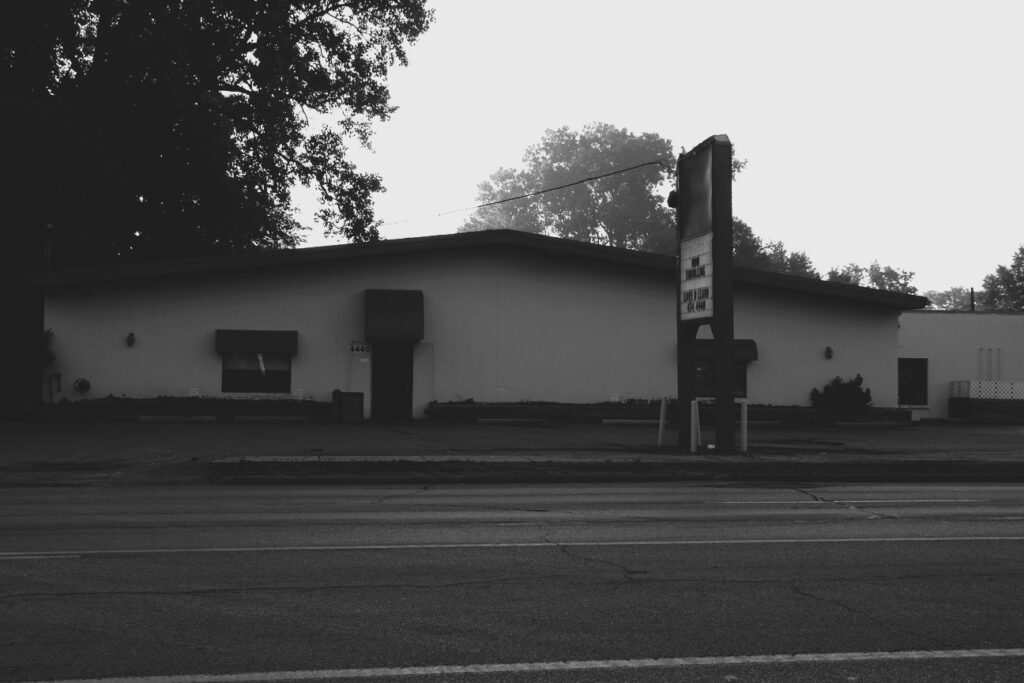
Teen dance club. Opened 1986. Closed 1988. Formerly Rainbow Acres Roller Rink (1964-1979).
Continue reading “Rosco’s Rock-N-Pop”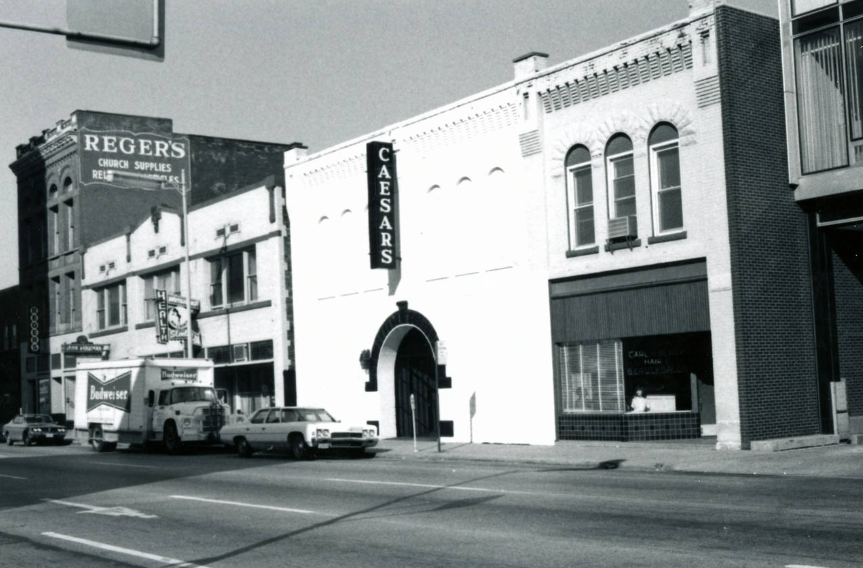
The original Caesars opened in the mid-1970s. It was owned by Joseph C. Wicks and located in the 100 block of Erie Street between Monroe Street and Jefferson Avenue between the International Health Studio and the Carl H. Blank Beauty Salon. Caeser’s relocated to 725 Jefferson in the mid-1990s, moving into the old Burt’s Theatre building, a Venetian inspired playhouse, at Jefferson and Ontario Streets.
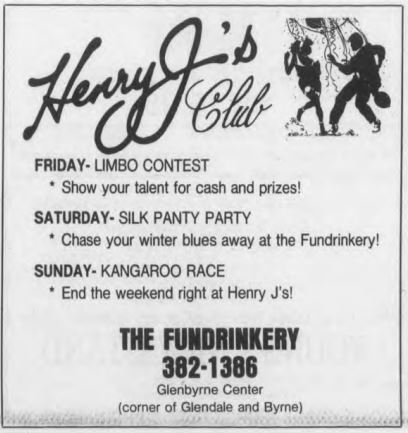
Continue reading “Caesars”Formerly Renee’s. Henry J’s commercial: https://youtu.be/DljwJa9M75g
“Advertised as a place to move together, Renee’s, 1532 S. Byrne Rd., is just that. Originally a disco, the jocks at Renee’s now spin both rock and disco records. Renee’s spacious three-level dance floor, possibly the best In Toledo, is usually filled to the maximum on Thursday, which is college ID night. Renee’s also has two well-stocked bars. Renee’s does have a dress code (no tennis shoes or faded jeans). On college ID night beer is $1.75 a pitcher, but there is not much emphasis on drinking, because dancing is the main attraction. The décor is Impressive with thick, plush carpeting under low, lounge-type furniture surrounding the dance floor. There is also an elevated area isolated by lattice work away from the chaos of the main floor.” – BG News, November 29, 1979