
“I remember when all this was ocean.”
Toledo, Ohio
Toledo rests on immense buried history, a landscape shaped not by a single world, but by a succession of vanished Earths layered one atop another through deep time.
In the Beginning
“We are made of star-stuff,” Carl Sagan, Cosmos.
The iron in the soil, the calcium in limestone, and the carbon locked within ancient rocks were not born on Earth at all. They were forged inside stars that lived and died billions of years before our planet existed. Across the galaxy, those elements were scattered by stellar explosions, recycled through generations of stars, and eventually gathered together by gravity.
We are stardust, we are golden
We are billion-year-old carbon
And we’ve got to get ourselves
Back to the garden
-Joni Mitchell, Woodstock
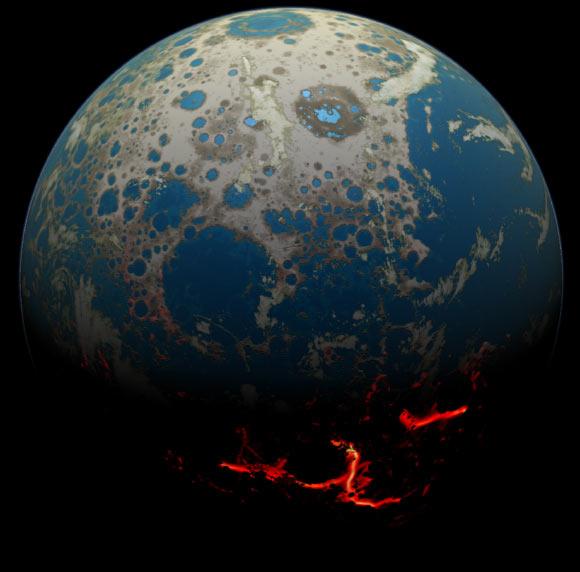
About 4.5 billion years ago, some of that cosmic debris became part of a young Earth forming within a swirling disk of dust, rock, and molten material around the newborn Sun.

The planet was a violent world utterly unlike anything that exists today. Asteroids slammed constantly into the surface while vast oceans of magma covered much of the planet.

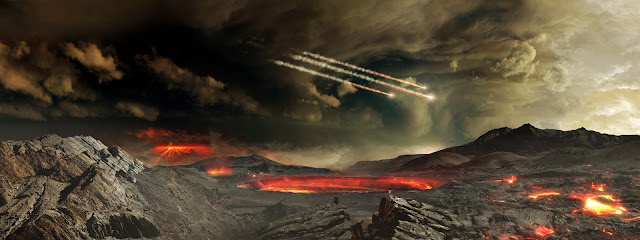
Over millions of years, Earth slowly cooled. The first crust hardened, water condensed into oceans, and the earliest continents began assembling from volcanic fragments drifting across the planet’s surface.
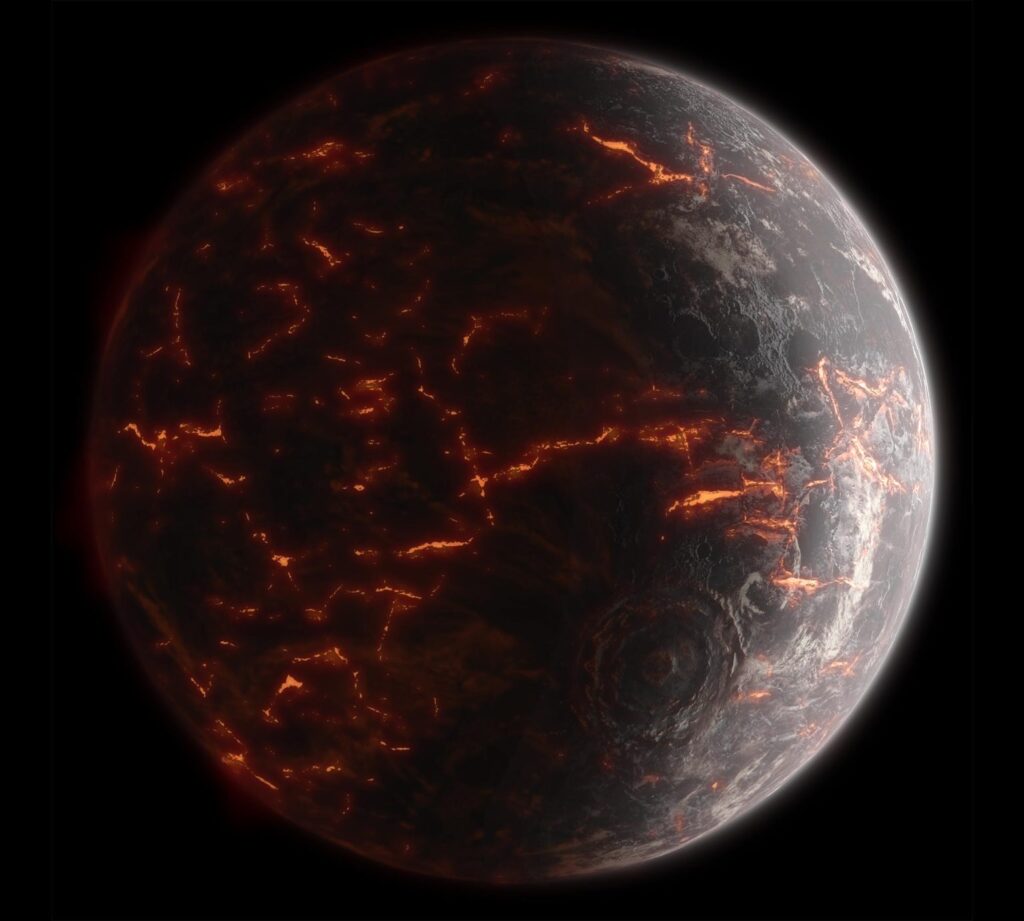
These primitive landmasses would eventually merge, break apart, and evolve into the ancient continental foundations that still underlie much of the modern world.
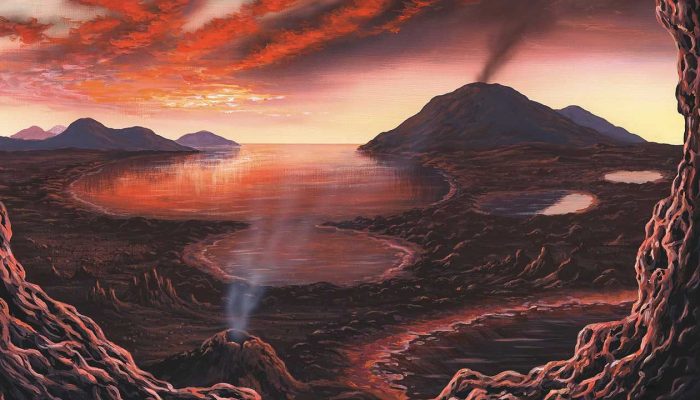
The ancient continental foundation of North America, known as Laurentia, was one of those continents. Portions of the deep basement rock that now lie far beneath Ohio originated during this era, forming part of the continent’s enduring core.
Over the next billion years, the continent was repeatedly reshaped by tectonic collisions. Between 1.5 and 1.0 billion years ago, ancient landmasses crashed together, raising mountain ranges rivaling the greatest on Earth. Though those mountains have long since eroded away, the immense forces that created them transformed the deep crust beneath what would eventually become Ohio.
By about 600 to 500 million years ago, the turmoil of continental assembly had largely subsided. Rising seas spread across much of North America, submerging the future Toledo region beneath warm, shallow marine waters. Layer upon layer of sand, mud, and lime-rich sediment accumulated on the ancient basement rock below, beginning the long process that would create many of the sedimentary formations underlying northwest Ohio today.
The world above those shallow seas was almost unrecognizable. Complex life was only beginning to flourish in Earth’s oceans, and the land remained largely barren. Yet beneath the waters covering the future Toledo region, the first chapters of the local geologic record were being written, preserving evidence of environments that vanished hundreds of millions of years before the city itself would ever exist.
Paleozoic Toledo
“Toledo’s deep history is more of an ocean story…“
370 Million Years Ago – “The Tropical Sea”

Stand in downtown Toledo and look east. The skyline disappears. The roads. The rail yards. The grain towers, smokestacks and bridges. The neighborhoods and warehouses. Lake Erie vanishes too, though not because the water is gone. The water is everywhere.
Northwest Ohio lies beneath a warm inland sea near the equator, its shallow waters glowing blue-green beneath an intense sun.

Coral reefs rise from the seafloor alongside strange sponge-like structures called stromatoporoids.
Schools of armored fish cruise through the lagoons while early sharks patrol deeper channels beyond the reefs. Trilobites crawl slowly across limey sediment scattered with shells and crinoids.
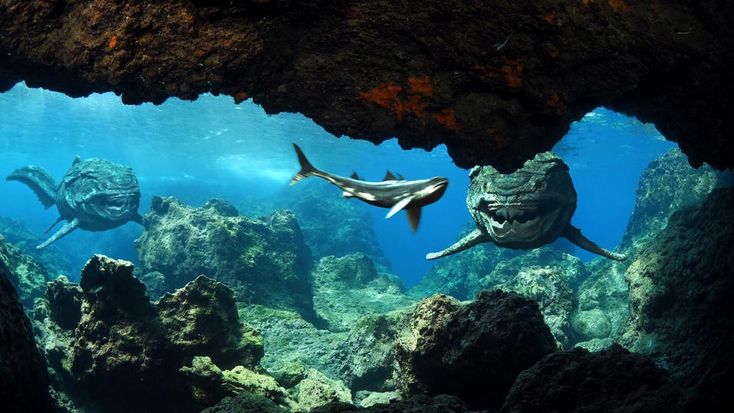
There are no birds overhead, no grass, no flowering plants, and no humans. Most life still belongs to the sea.
Along distant coastlines primitive forests are beginning to spread across the continents, but Toledo itself is entirely underwater.
340 Million Years Ago — “Retreating Seas”
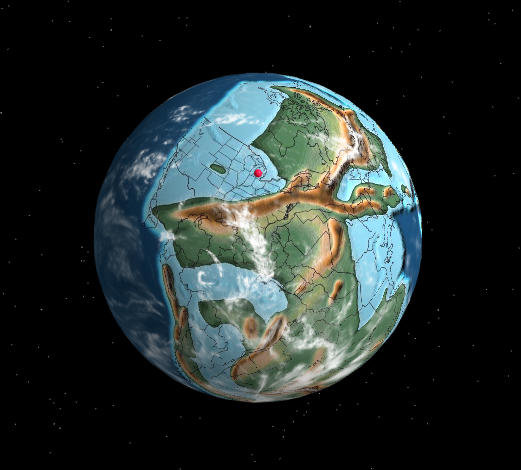
By 340 million years ago, the tropical sea still influences Toledo, but the landscape has become more unstable and varied. Shallow marine waters repeatedly advance and retreat across broad coastal plains. Muddy deltas spill sediment into lagoons and tidal flats while low swampy forests begin spreading inland. Rivers snake slowly through humid lowlands beneath a hot equatorial sky.
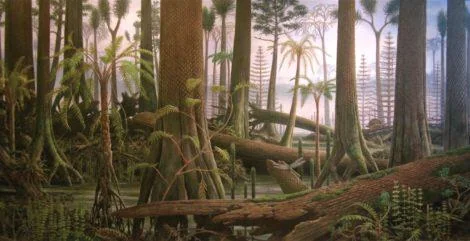
The world feels transitional. Marine ecosystems still thrive offshore, but land plants are becoming larger and denser. Primitive forests crowd the edges of wetlands where amphibians lurk in shallow pools and insects move through thick vegetation. Toledo sits in a shifting boundary between sea and land, neither fully ocean nor fully continent.
320 Million Years Ago — “The First Great Forests”

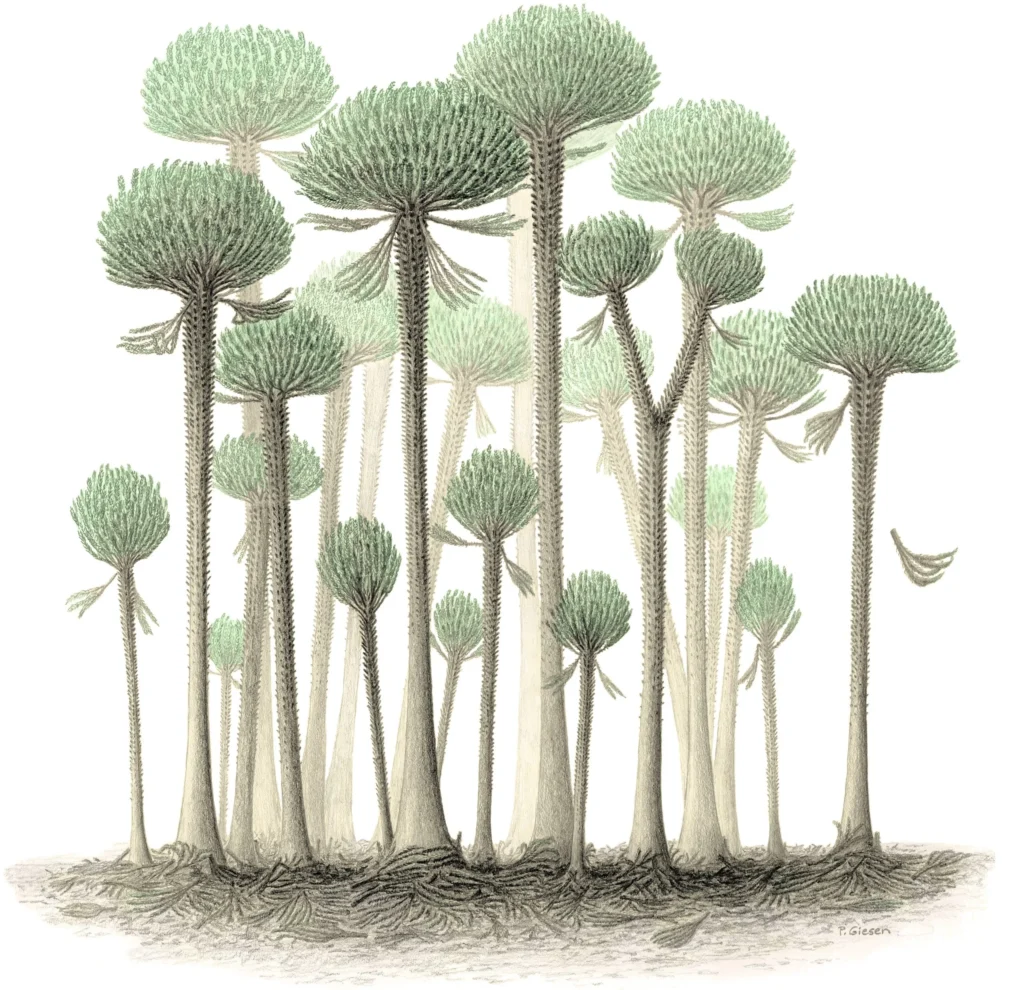
At 320 million years ago, Toledo has transformed into a vast tropical rainforest swamp. Towering club mosses and giant horsetails rise from dark waterlogged soil, some reaching heights comparable to modern trees. Dense fern thickets cover the swamp floor while slow blackwater rivers wind through endless wetlands beneath heavy clouds and frequent rainstorms.
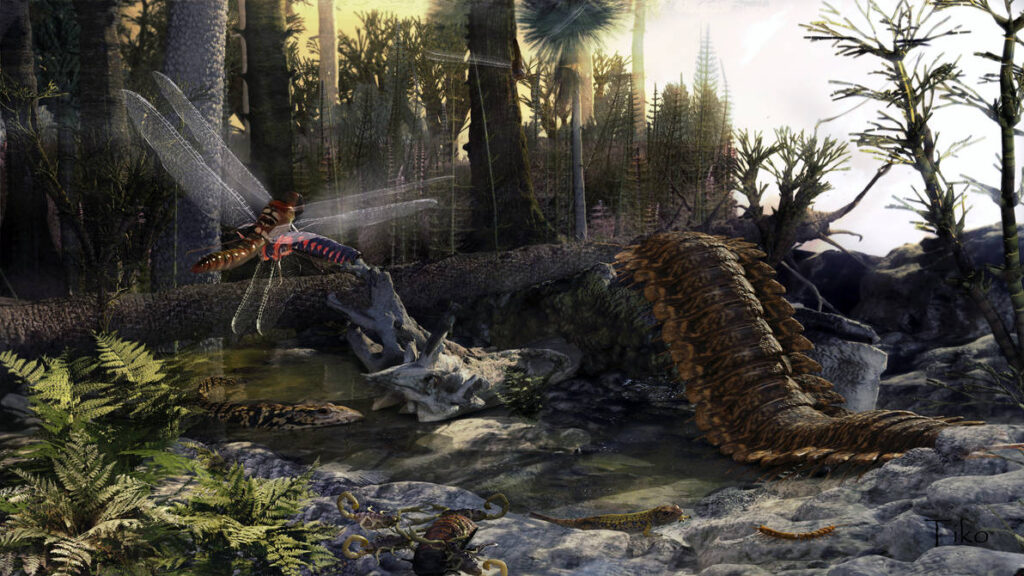
The atmosphere is rich with oxygen, making the world feel strangely energetic and oversized. Giant dragonflies buzz through the humid air while amphibians dominate the marshes below. The ground squishes under thick mats of decaying plant material that will someday become coal deposits deep underground. Toledo now resembles a prehistoric mangrove wilderness stretching across the equator.
300 Million Years Ago — “The Coal Swamps”
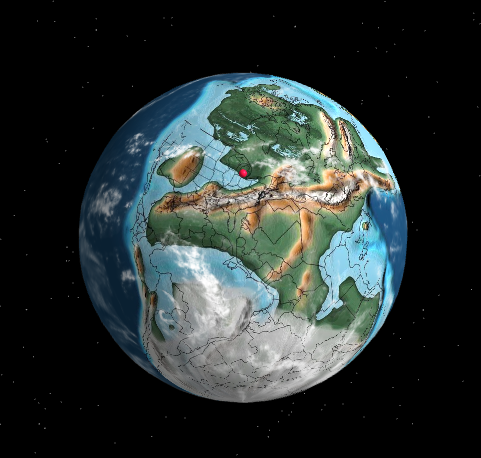
By 300 million years ago, the swamp forests have reached their peak. Toledo lies within one of the largest tropical wetland systems Earth has ever known. Massive forests of lycopods, seed ferns, and horsetails crowd the floodplains while stagnant channels and shallow ponds reflect the dark green canopy above. Warm rain falls constantly, feeding rivers that overflow seasonally and bury the wetlands beneath fresh layers of mud.
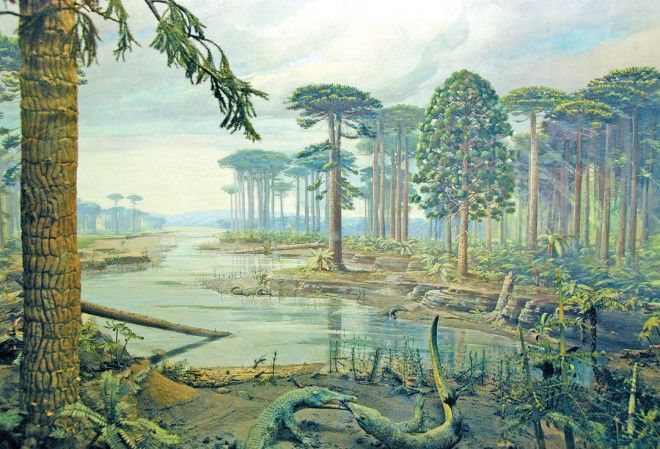
The sounds are alien. Giant insects clatter through the vegetation while amphibians lurk everywhere in the shadows and water. Early reptiles begin appearing on slightly drier ground. The landscape is lush but unstable, forever flooding, sinking, and rebuilding itself beneath the humid skies of equatorial Pangaea.
280 Million Years Ago — “The Drying World”
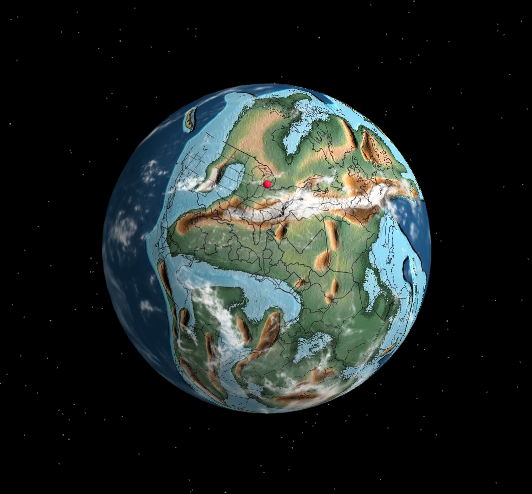
At 280 million years ago, Toledo’s endless swamps are fading. The formation of Pangaea has altered global climate patterns, creating harsher seasonal conditions far from ocean moisture. Forests still exist, but they are patchier and more drought-tolerant. Broad muddy floodplains stretch beneath long dry seasons and intense summer heat.
The giant wetland ecosystems of the Carboniferous are disappearing. Amphibians retreat toward remaining waterways while reptiles expand into drier habitats. Dust rises from exposed sediment during droughts, and rivers fluctuate dramatically between floods and near-desiccation. Toledo now feels less like a rainforest and more like a seasonal subtropical basin struggling through climatic transition.
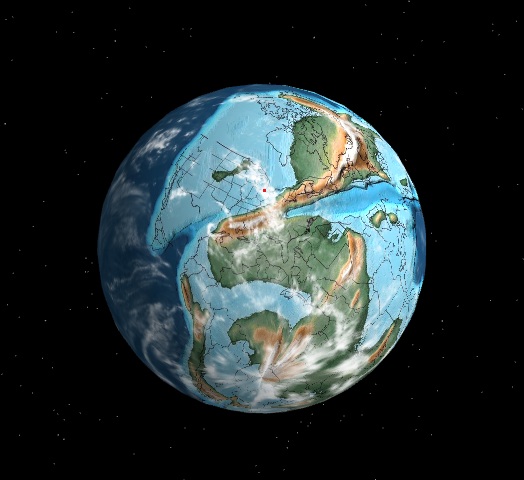
260 Million Years Ago — “The Interior of Pangaea”
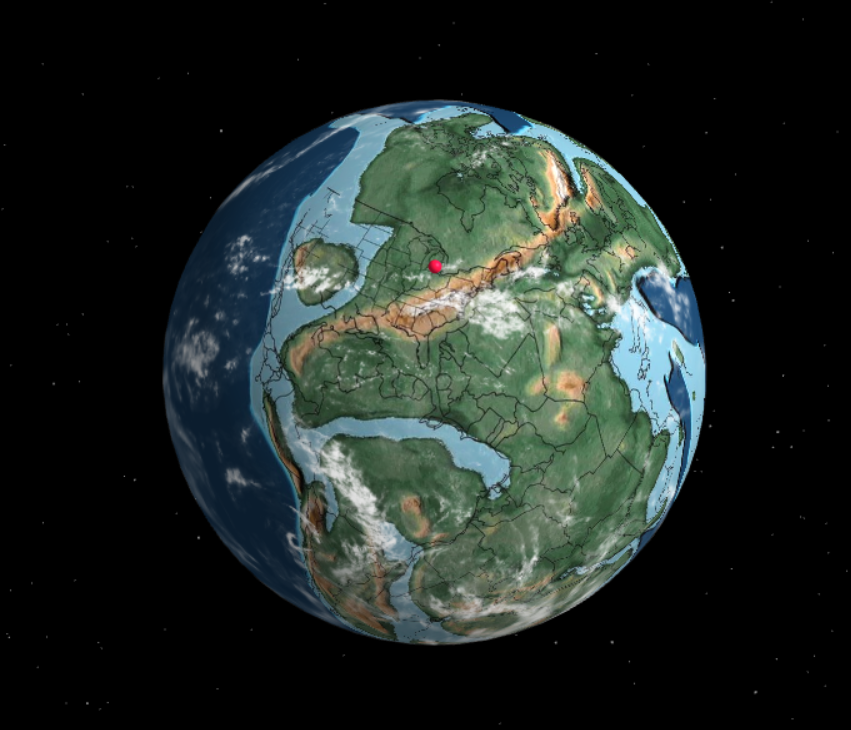
Two hundred sixty million years ago, Toledo sits deep inside the enormous supercontinent of Pangaea, surrounded by a single ocean, known as Panthalassa. The climate is hot, strongly seasonal, and often dry. Much of the landscape consists of broad reddish plains crossed by intermittent rivers that flood violently during wet seasons and shrink during droughts. Vegetation grows mainly along waterways while large open areas remain sparsely covered.

The lush swamp forests of earlier ages are gone. Reptiles dominate the land, better adapted to dry conditions than the amphibians that once ruled these environments. Dust storms may sweep across the plains during the driest months. Much of Toledo’s geological history from this time has been erased by later erosion, leaving only fragments of evidence from this harsh continental interior.
250 Million Years Ago – “The Great Dying”
Triggered by massive, prolonged volcanic eruptions in the Siberian Traps, the crisis filled the atmosphere with greenhouse gases, leading to runaway global warming, ocean acidification, and widespread deoxygenation.
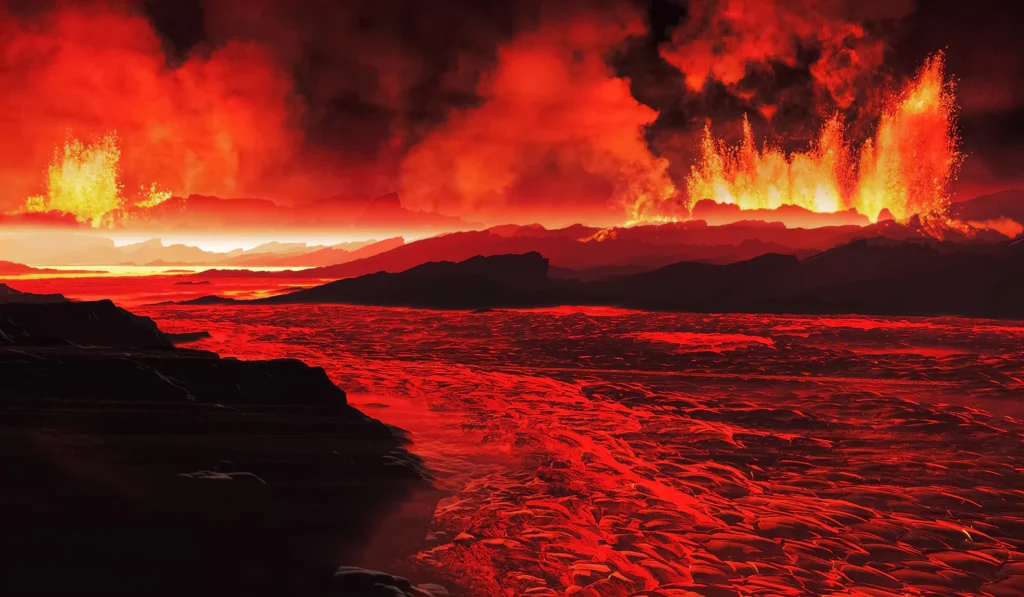
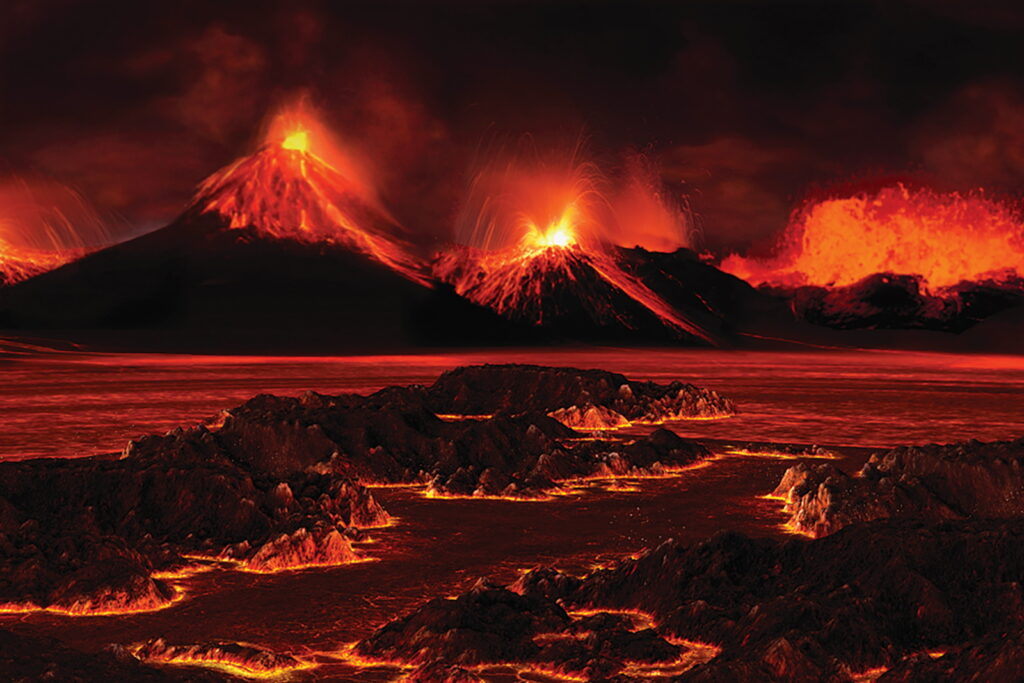
“The Great Dying” was the most severe mass extinction in Earth’s history. Nearly 95% of all life perished.
240 Million Years Ago — “After the Great Dying”
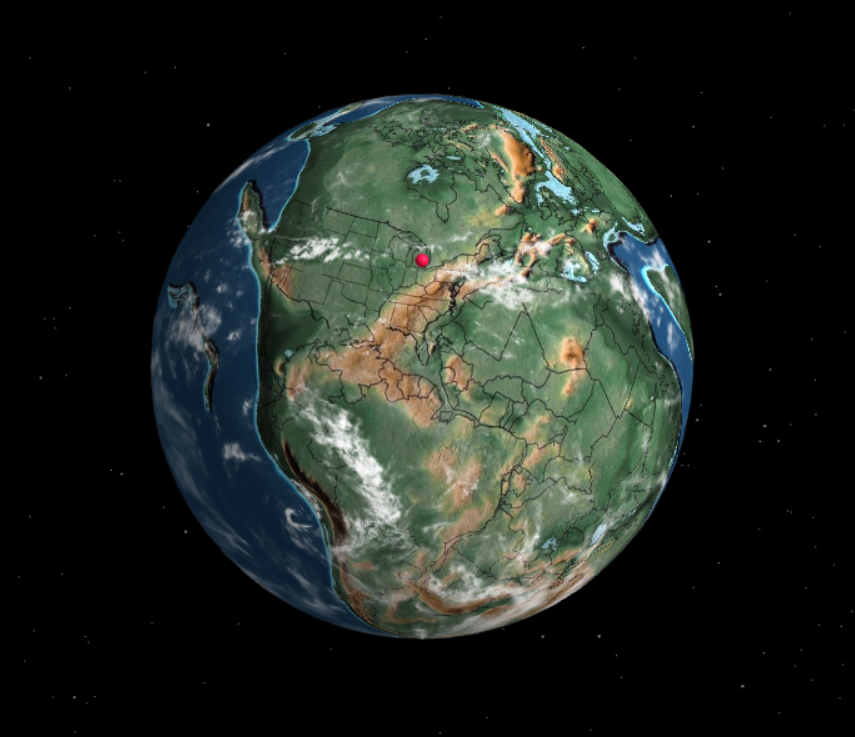
At 240 million years ago, Earth is still recovering from the Permian-Triassic Extinction Event. Toledo lies within a warm landscape of rivers, dry lowlands, and scattered forests of conifers and seed plants. Ecosystems are rebuilding, but biodiversity remains lower than in earlier eras.
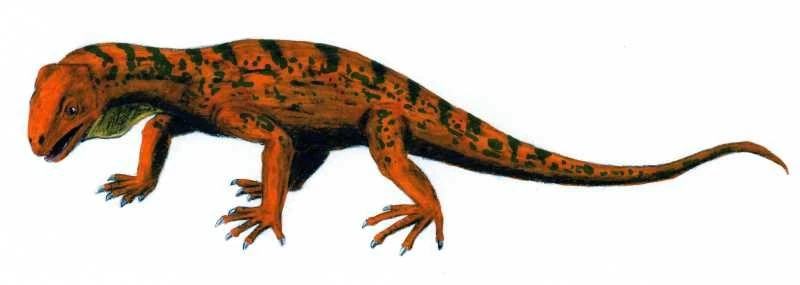
Strange reptilian animals dominate the environment. Crocodile-like archosaurs patrol riverbanks while small early dinosaur relatives move cautiously across floodplains. The climate is unstable, swinging between wet and dry periods under a hot Triassic sun. The world feels open and recovering, as though Earth itself is slowly rebuilding after catastrophe.
220 Million Years Ago — “The First Dinosaurs”
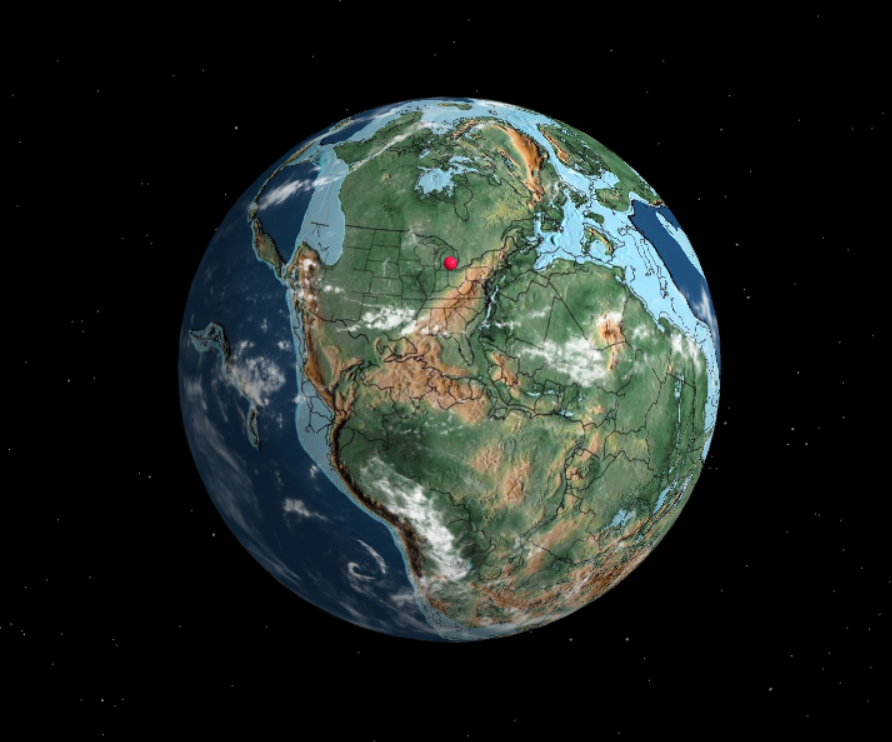
By 220 million years ago, Toledo lies within the vast continental interior of late Triassic Pangaea. Seasonal rivers cross broad plains dotted with conifer groves and fern-covered lowlands. The climate is hot with alternating monsoon rains and long dry periods that crack the soil and shrink rivers into muddy channels.
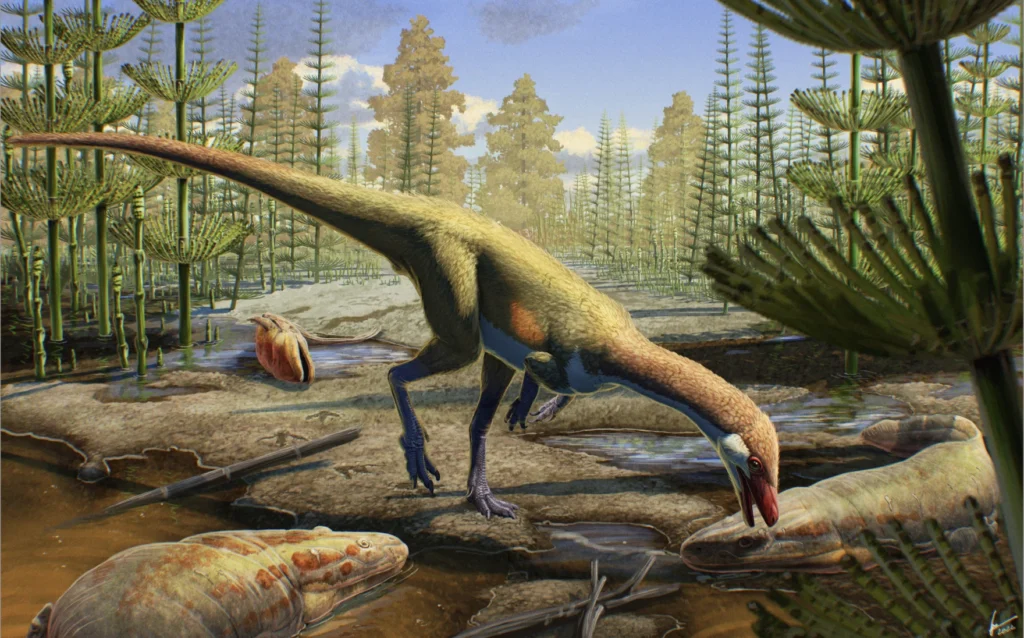
Across North America, small dinosaurs and crocodile relatives were becoming increasingly common. The land that would one day become Toledo may have supported pioneering archosaurs. The rocks that might have recorded their presence are either absent, poorly preserved, or difficult to correlate in the Toledo area, so this chapter of Toledo’s deep history is uncertain.
200 Million Years Ago — “Pangaea Breaks Apart”
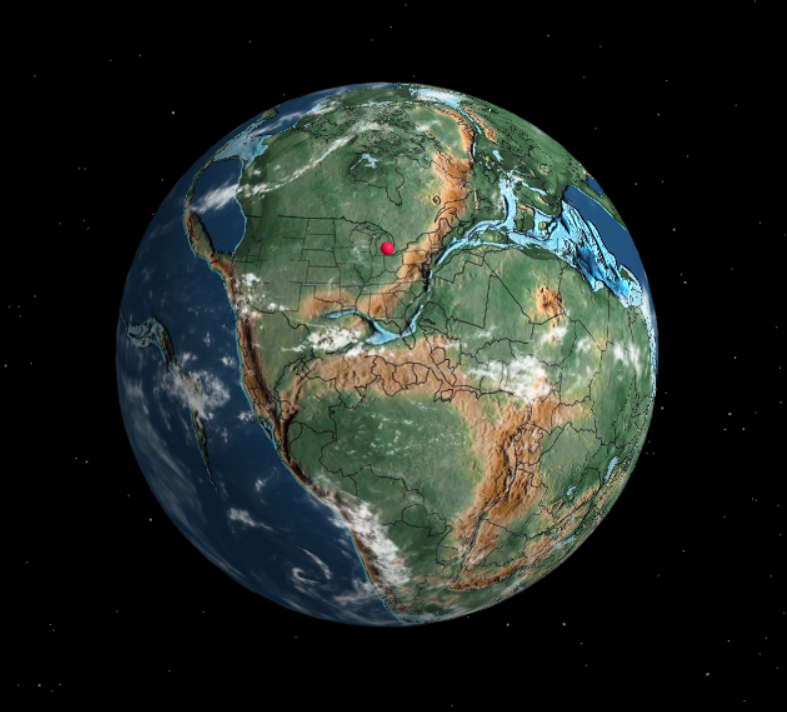
At 200 million years ago, the supercontinent Pangaea is beginning to fracture. Massive volcanic eruptions shake parts of eastern North America as tectonic forces pull the continent apart. Toledo itself lies inland within a warm greenhouse climate filled with forests of conifers, cycads, and ferns.
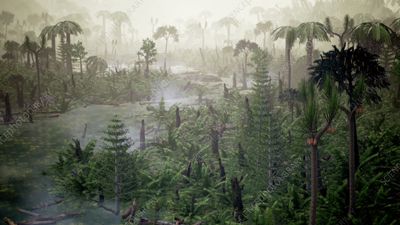
Dinosaurs were becoming increasingly dominant across North America after a major extinction event eliminated many competitors. Early theropods hunted smaller animals while crocodile relatives persisted in rivers and wetlands.
Earth’s climate remained warm, with little evidence of permanent polar ice. Although almost no rock from this age survives beneath Toledo, the region was part of this rapidly changing Jurassic world, even if the details have been lost to time.
170 Million Years Ago — “A Dinosaur World”
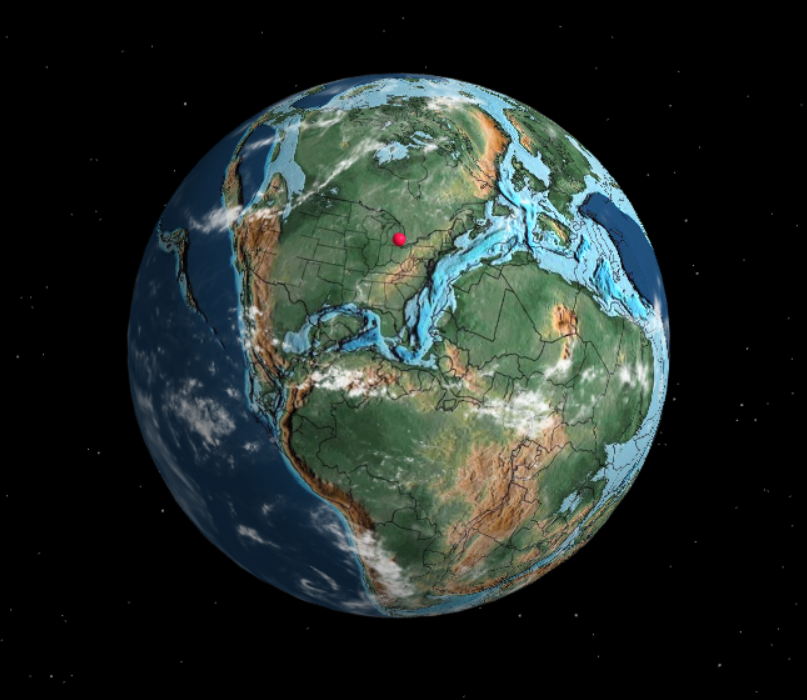
By 170 million years ago, Toledo would appear as a lush subtropical lowland covered in forests and crossed by rivers and wetlands. Large conifers tower above fern-covered ground while humid air hangs over broad floodplains. Seasonal storms feed rivers that wander slowly through the landscape.

Dinosaurs dominated terrestrial ecosystems across much of North America. Giant sauropods, predatory theropods, pterosaurs, and countless smaller animals inhabited warm Jurassic landscapes.
Rocks from about 170 million years ago don’t sit neatly in the ground beneath Toledo, at least not in a way geologists can read and connect. So the Middle Jurassic world that may have once stretched across the region has to be pieced together indirectly, from broader evidence beyond Toledo itself, rather than from a clear local record.
150 Million Years Ago — “Forests of Giants”
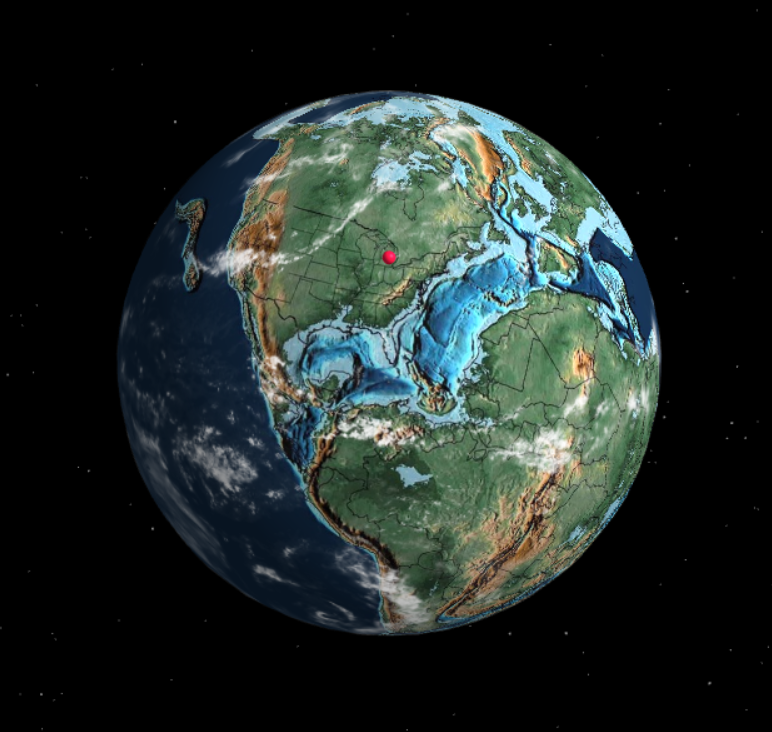
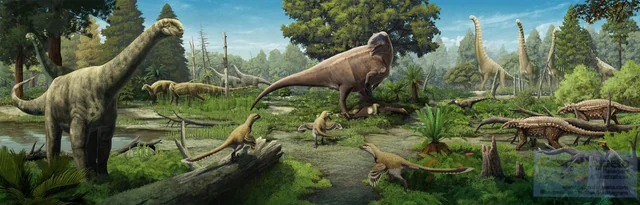
Around 150 million years ago, dinosaurs thrived across much of North America. Vast forests, river systems, and coastal environments supported enormous sauropods, agile theropods, and a wide diversity of other reptiles. In some regions, conifers, cycads, and ferns formed dense green landscapes under warm Jurassic skies.
In the Toledo area, though, that same story is harder to pin down: the local subsurface record for the Jurassic is not a clean, continuous record that allows for the reconstruction of the region’s exact landscapes and ecosystems.
120 Million Years Ago — “Flowering Worlds”
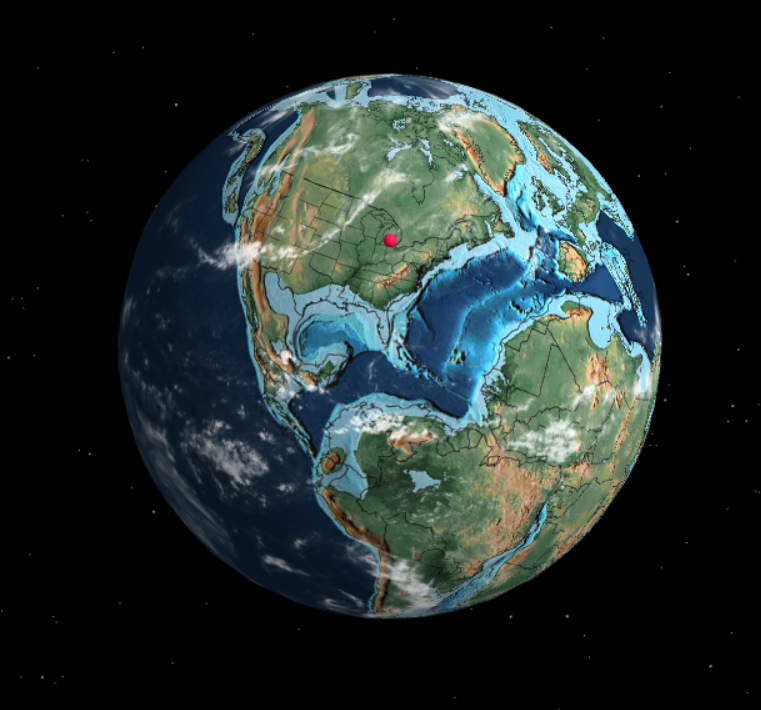
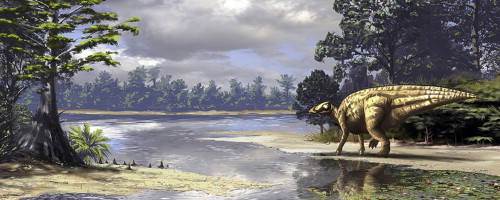
Around 120 million years ago, flowering plants were beginning to spread across many parts of the world, gradually transforming ecosystems that had long been dominated by conifers, cycads, and ferns. Insects evolved alongside these new plants, forming increasingly complex ecological relationships. Dinosaurs remained the dominant large animals across most terrestrial environments, with diverse herbivores and predators occupying a wide range of ecological roles.
The Toledo region belonged to a Cretaceous world that was changing fast, yet the details of what the land itself looked like here are hard to reconstruct. The older rocks that would help tell the story aren’t present or aren’t preserved in a clear way.
105 Million Years Ago — “The Expanding Seaway”
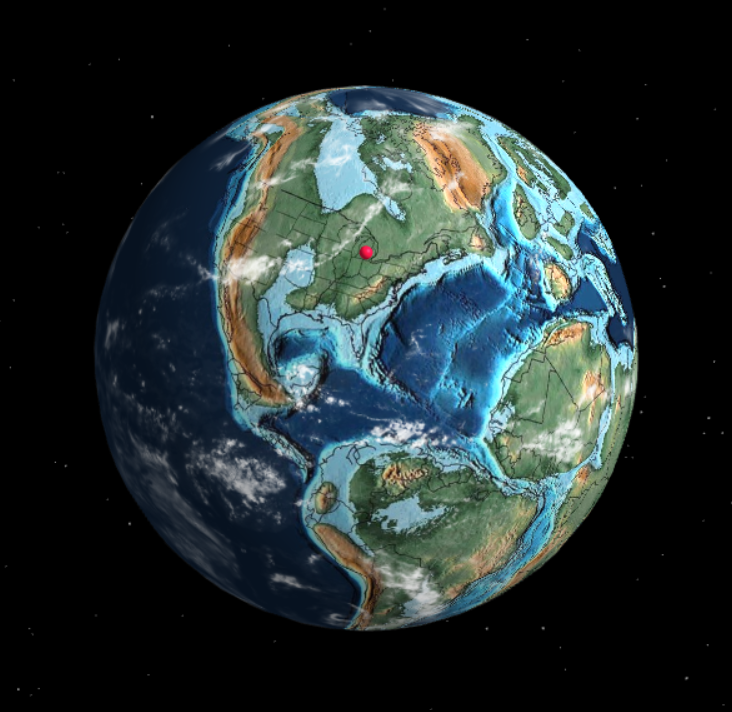
Around 105 million years ago, flowering plants were continuing their rapid expansion across many parts of the world, gradually transforming ecosystems that had long been dominated by conifers, cycads, and ferns. Insects diversified alongside these new plants, forming increasingly complex ecological relationships. Dinosaurs remained the dominant large terrestrial animals, occupying a wide range of ecological roles across the planet.
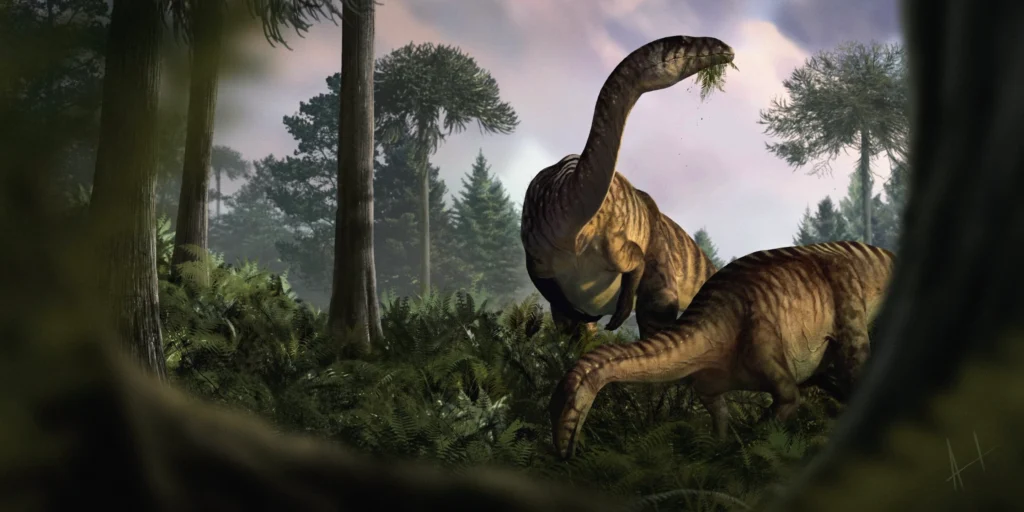
Rocks from about 105 million years ago are not well established in the Toledo region, so the local environment can’t be reconstructed directly. The area would have been part of a globally changing Cretaceous world, but the specific landscapes and ecosystems there are hard to pin down from the local record.
90 Million Years Ago — “The Greenhouse Earth”
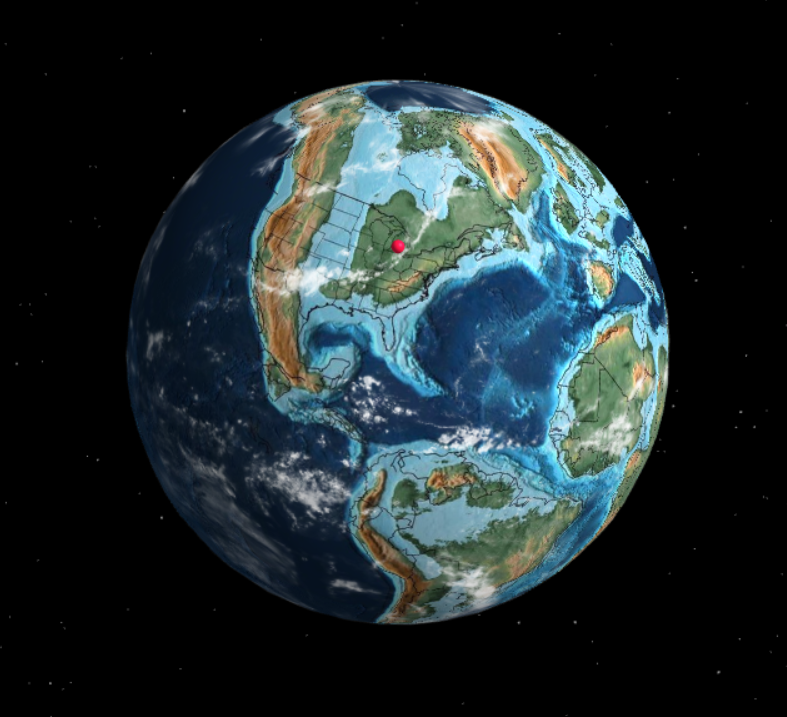
Around 90 million years ago, Earth was in a warm greenhouse climate. Sea levels were high, and shallow inland seas covered large portions of North America. Flowering plants had become widespread and increasingly diverse, reshaping ecosystems that had long been dominated by conifers, cycads, and ferns. Dinosaurs dominated terrestrial environments across much of the planet, while marine reptiles thrived in warm epicontinental seas.
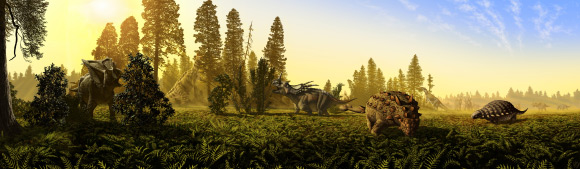
The area that would become Toledo existed in this globally warm world, but its specific landscapes are hard to reconstruct from the local rock record.
50 Million Years Ago — “A Tropical America”
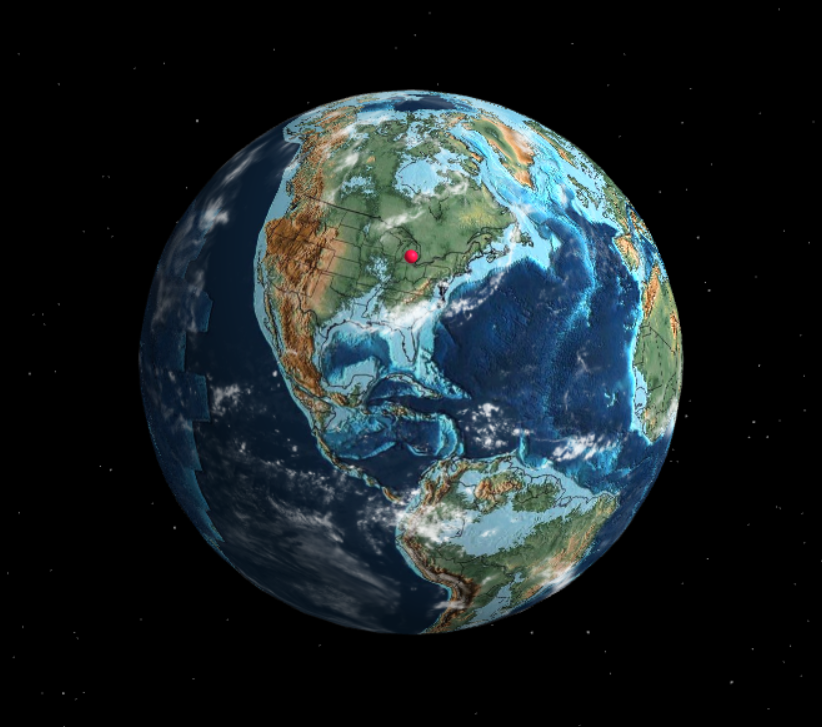
Around 50 million years ago, Earth was in a prolonged warm greenhouse phase. Global temperatures were high, and there were no permanent ice sheets anywhere on the planet. Forests stretched across much of North America, including high-latitude regions, and mammals were rapidly diversifying into many of the major groups that would later dominate modern ecosystems. Early primates, hoofed mammals, and carnivorous mammals were spreading through warm, forested landscapes.
Toledo was part of this warm, forested Eocene world, but its exact landscapes and ecosystems are hard to reconstruct from the local geologic record.
35 Million Years Ago — “The Cooling Begins”
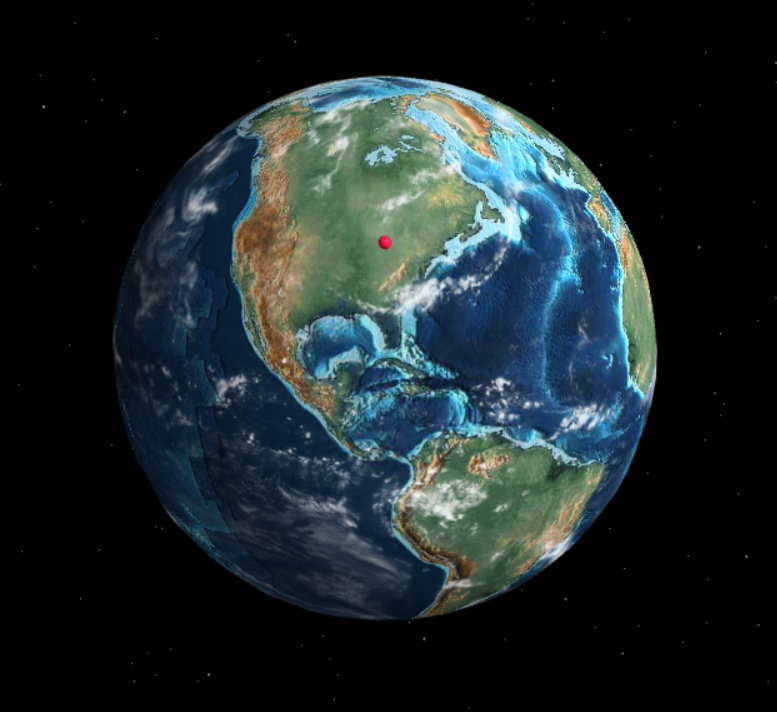
Around 35 million years ago, Earth was undergoing a major climatic transition. Global temperatures were gradually cooling, and the planet was shifting out of the warm greenhouse conditions of the early Eocene. Antarctic ice sheets were beginning to form, and ecosystems across the world were slowly reorganizing in response to changing climate patterns. Mammals continued to diversify, with many modern groups becoming increasingly established across continents.
The area that would become Toledo existed within a cooling, late Eocene world, but the details of its landscapes and ecosystems aren’t well captured in the rocks there.
20 Million Years Ago — “Before the Ice”
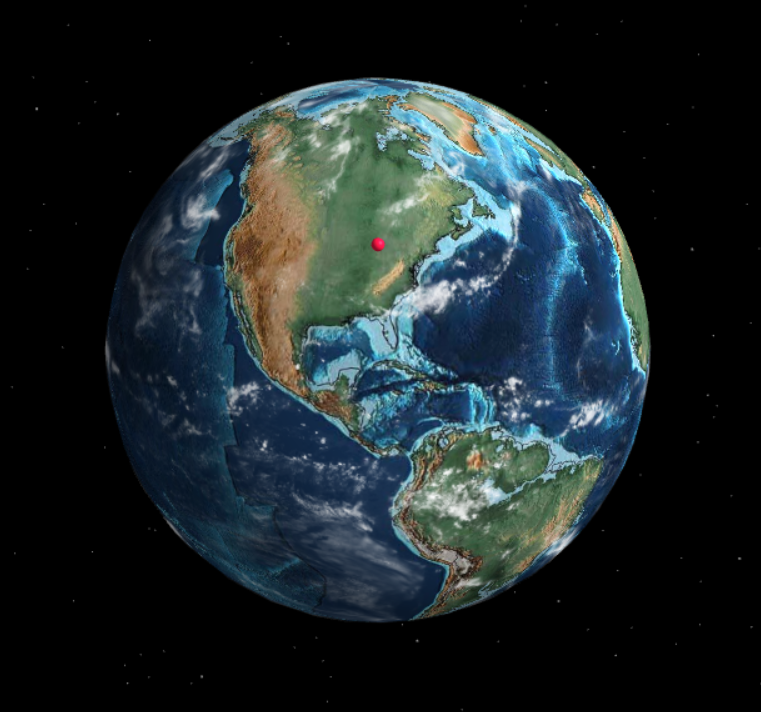
Around 20 million years ago, Earth was in the early Miocene, a time of gradual cooling and ecological transition. Grasslands were beginning to expand in many parts of the world, while forests still covered large regions.
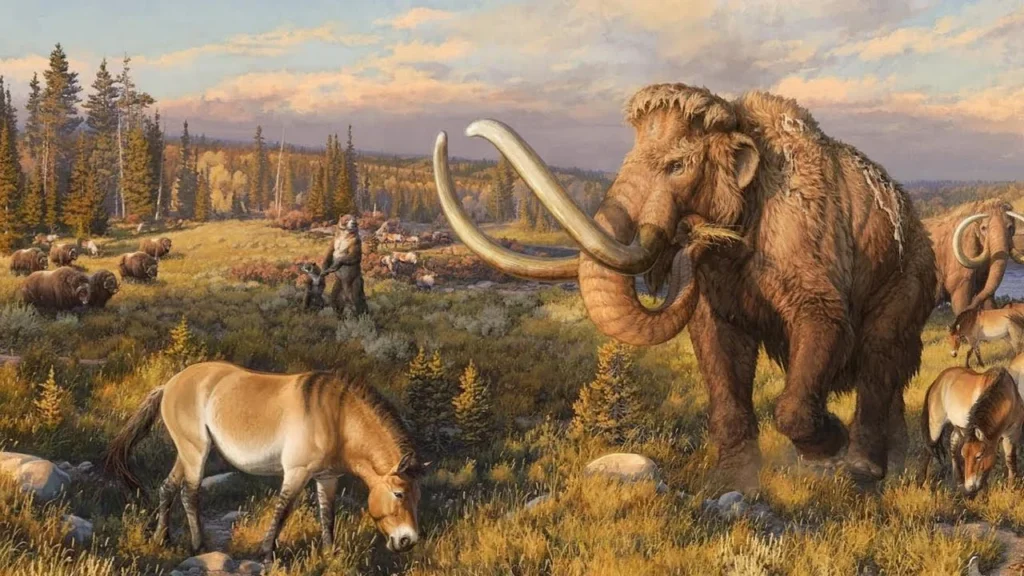
Mammals had diversified into many modern groups, including early relatives of horses, camels, rhinos, and carnivores. Ecosystems were becoming more recognizable in structure, even as global climates continued to shift.
The area that would become Toledo lay within a changing Miocene world, but the details of its local landscapes and ecosystems are not well captured by the rocks there.
2.5 Million Years Ago — Ice Age Begins
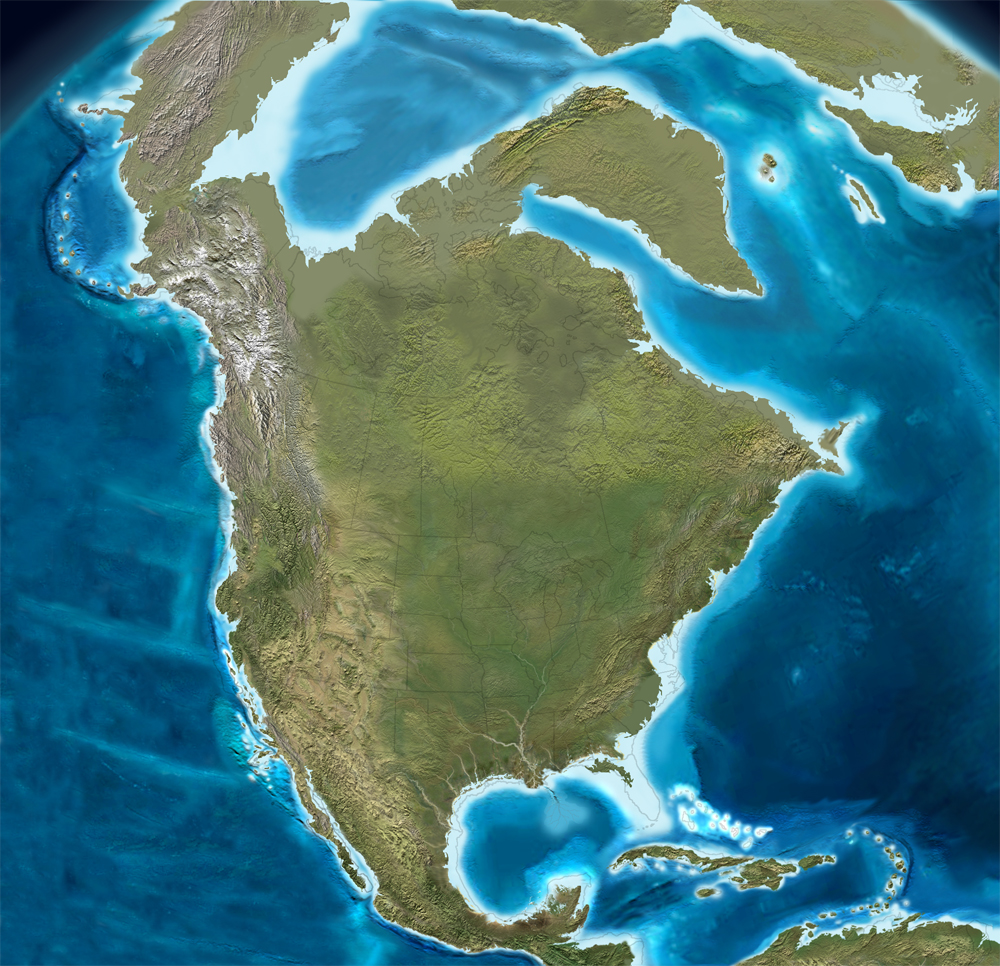
Around 2.5 million years ago, Earth was entering the Ice Age. The Pleistocene Epoch was beginning, marked by significant global cooling and the expansion of continental glaciers across the Northern Hemisphere.
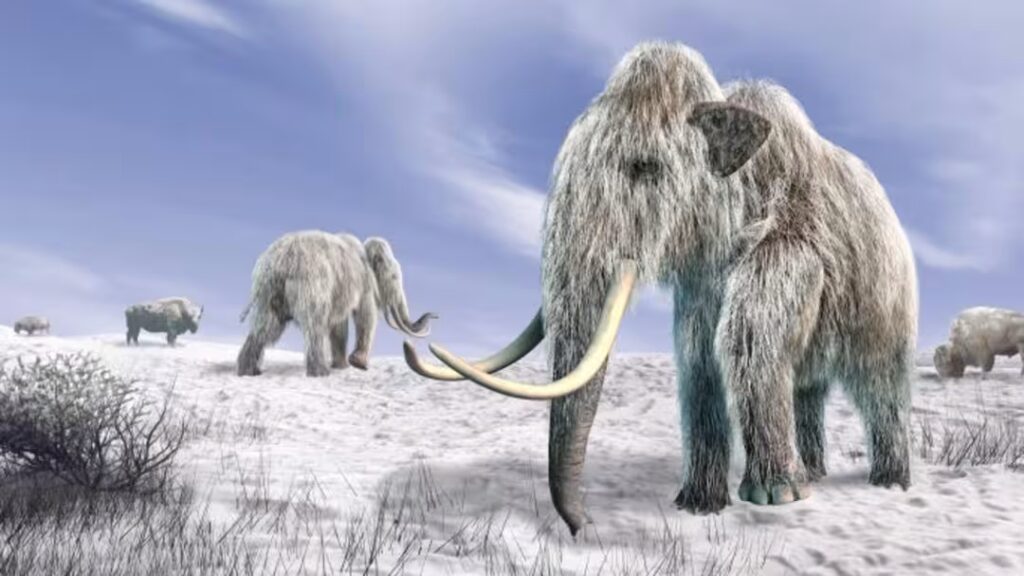
Mammals adapted to colder climates, such as early mammoths, mastodon relatives, and large Ice Age predators, began to spread across parts of North America.
In the region that would become northwest Ohio, the landscape was beginning a long transition toward glacial influence. Rivers and drainage systems were being reorganized, and advancing ice sheets would soon begin repeatedly reshaping the terrain. While the exact local environment isn’t preserved in detail from this earliest Pleistocene time, the area was becoming part of the dynamic Ice Age world that would ultimately define its modern geology.
20,000 Years Ago — Glacial Toledo
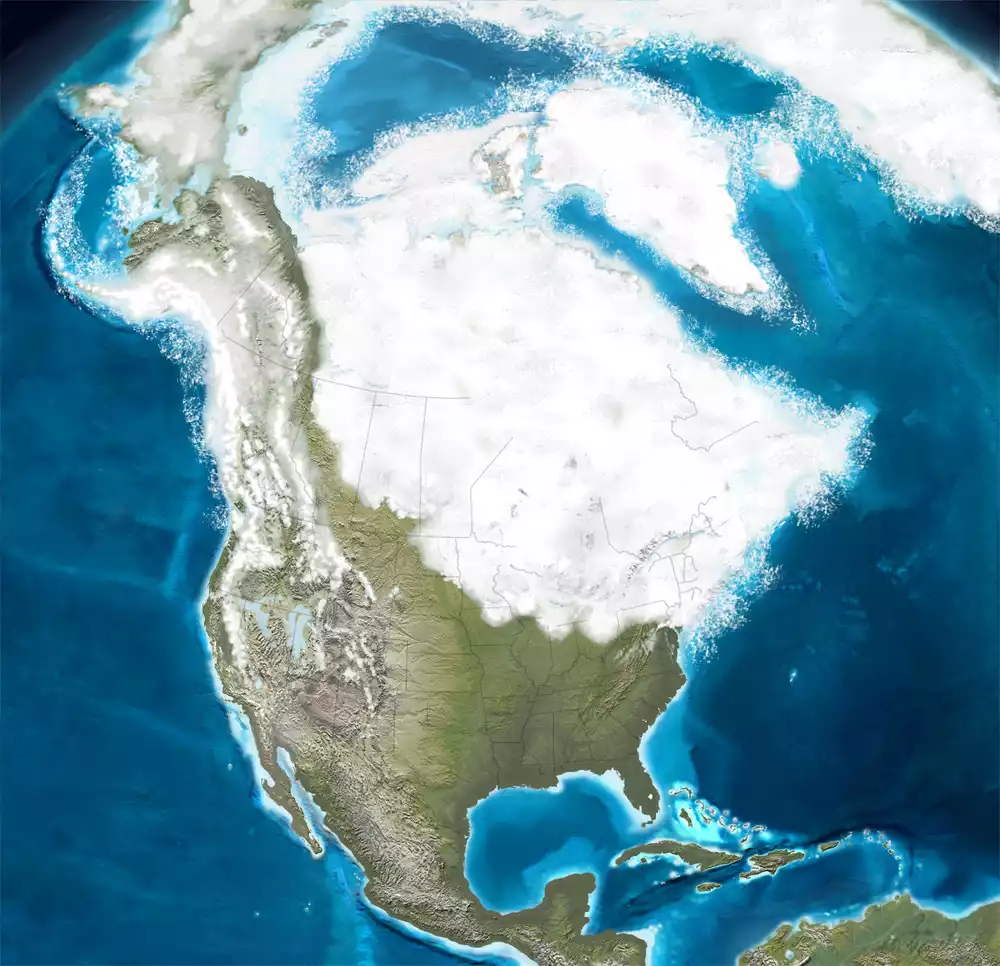
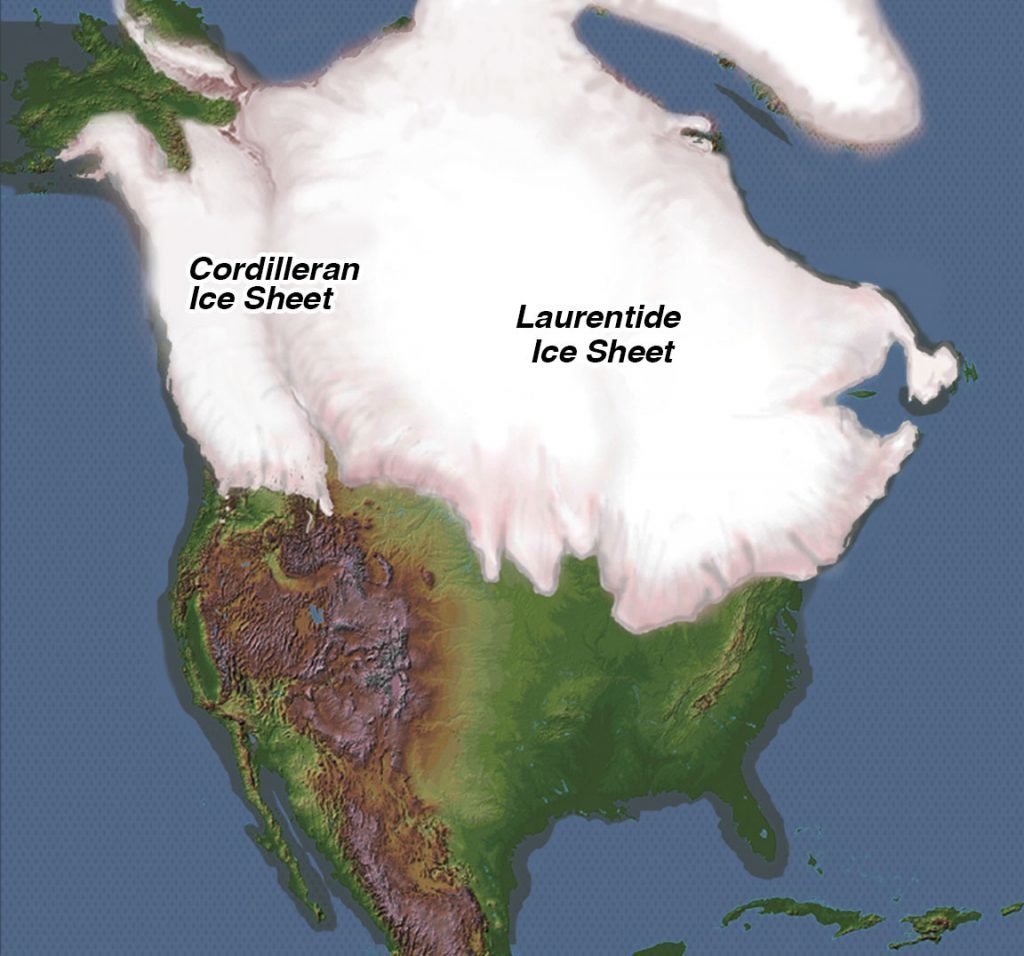
Around 20,000 years ago, northwest Ohio lay near the southern margin of the Laurentide Ice Sheet, at the peak of the last Ice Age, when conditions at the ice margin were cold and unstable.
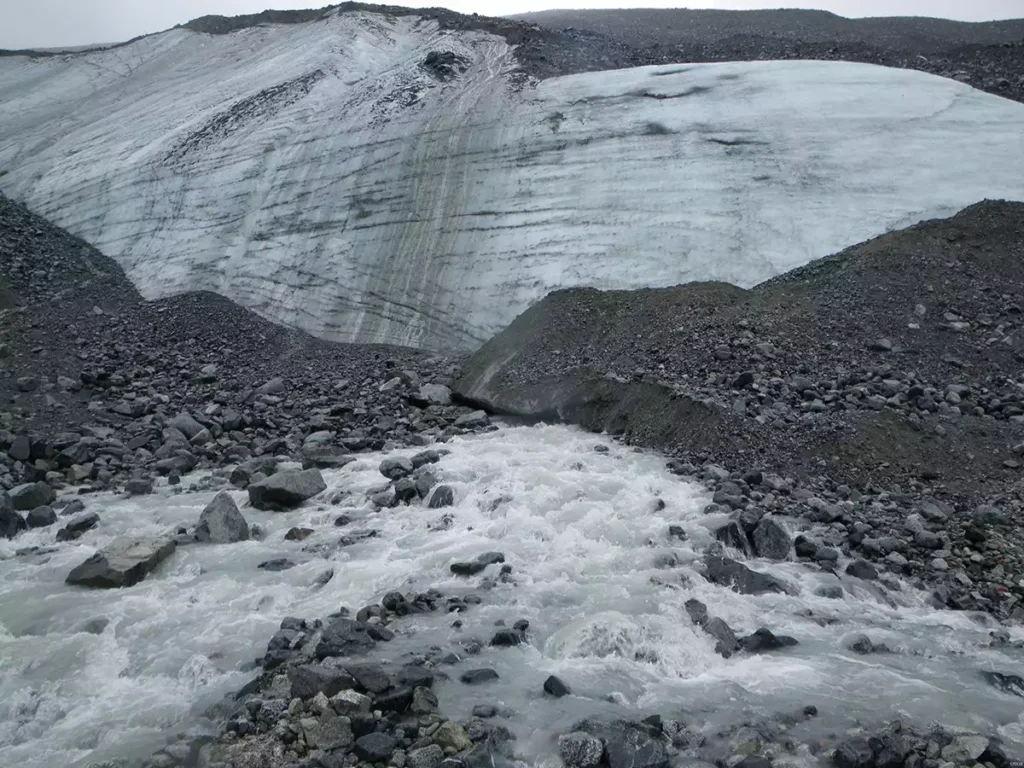
When glacial ice began to loosen its grip on northwest Ohio, sometime after the Last Glacial Maximum (19,000–18,000 years ago), the landscape didn’t simply “appear,” it shifted. Glacial till, sand, and gravel were repeatedly reworked by meltwater, carving new channels, redistributing sediment into ridges and bars, and leaving low areas to hold temporary lakes that gradually drained. Periglacial conditions kept vegetation sparse, especially near the former ice margin, while the exposed ground remained restless and unfinished. In that slow, real-time change, rivers and wetlands started taking shape and the drainage patterns that would later feed the Maumee River system and the Lake Erie basin began to emerge. Large Ice Age mammals, including mammoths and mastodon relatives, ranged across the broader Great Lakes region, but their presence in the immediate Toledo area likely varied as ice advanced and retreated and as local habitat changed with the evolving waterways.
Visible Ancient Toledos
Sylvania quarry belt (Devonian seafloor exposure)
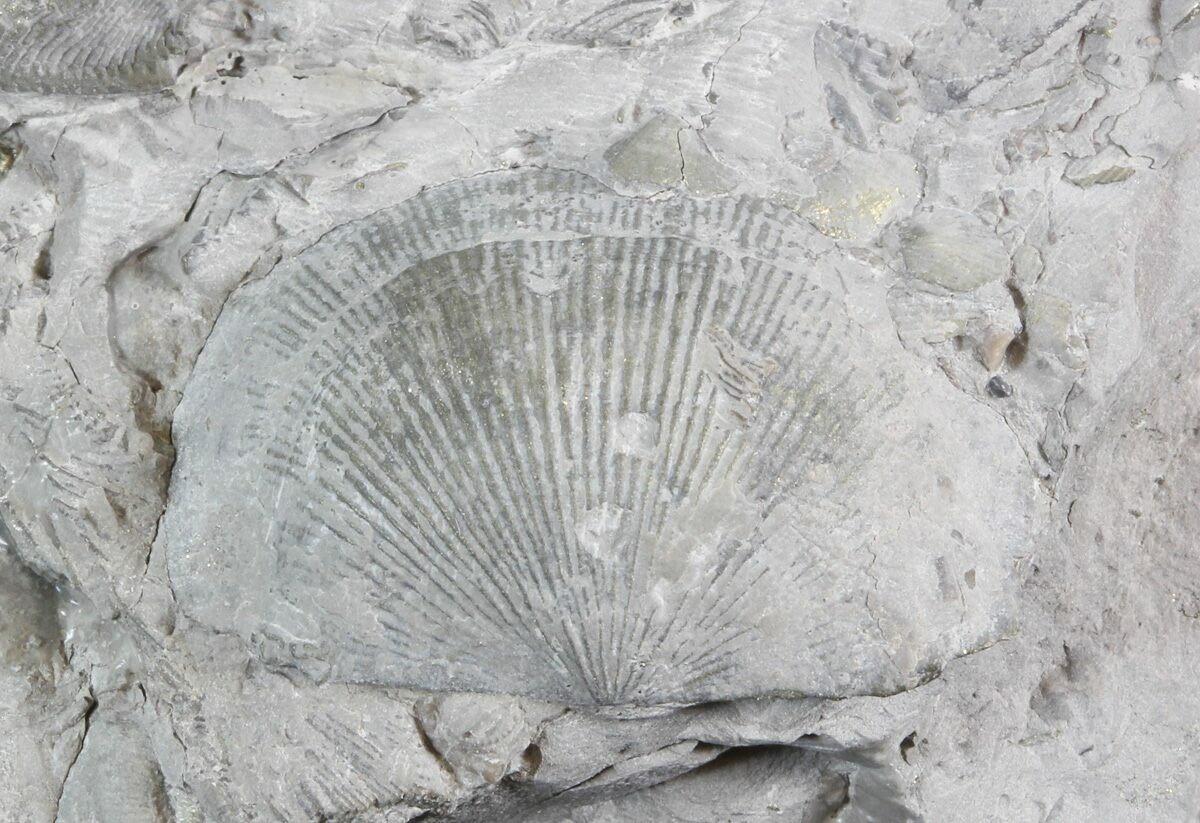
Quarries in the Sylvania region expose limestone and dolostone formed in ancient tropical seas over 380 million years ago. These rocks contain marine fossils such as corals, brachiopods, crinoids, and trilobites, preserving a Devonian ocean ecosystem far older than the Ice Age or modern landscapes.
Best places (most important geological sites):
- Fossil Park
- Silica Quarry Fossil Park (adjacent quarry material)
- Local quarry exposures (access restricted in many active sites)
What you can see:
- Brachiopods, crinoids, corals
- Limestone and dolostone layers
- Ancient tropical sea floor rock